
Peregrine
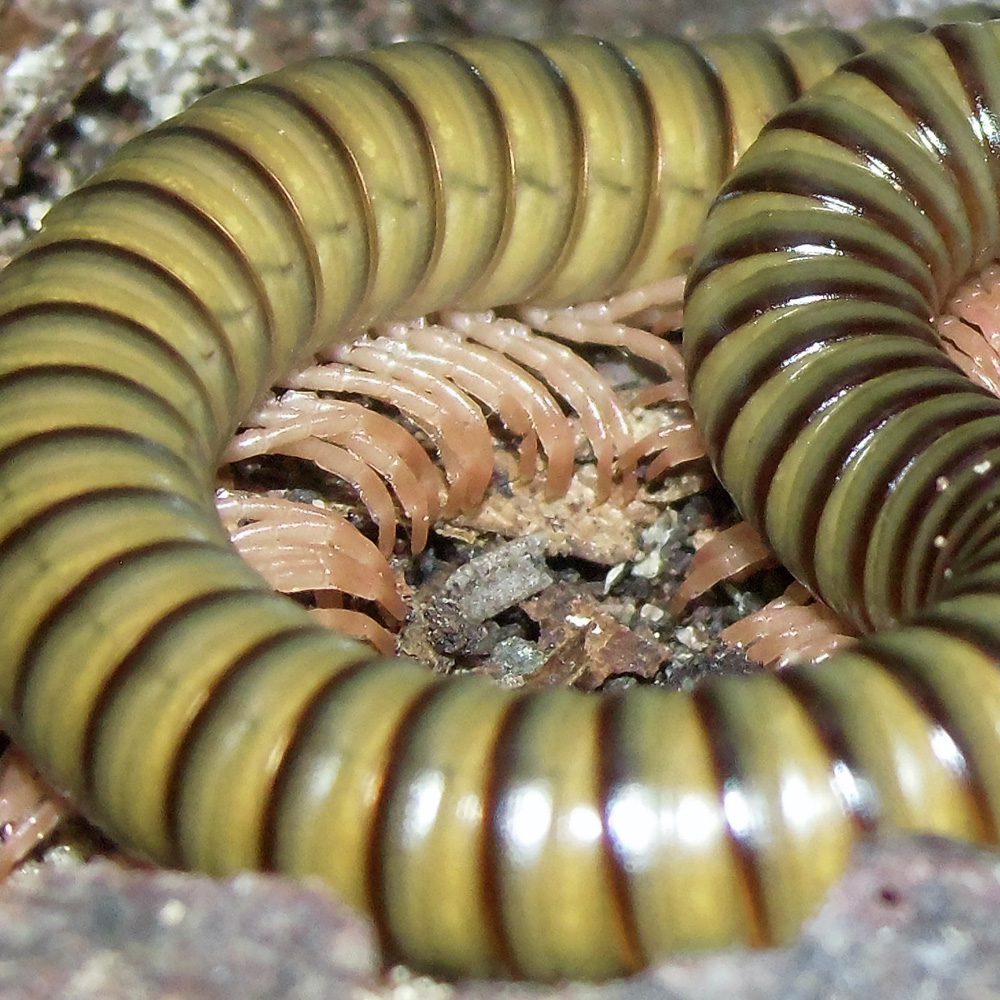
African Green Millipede
African Green Millipede
Low stock: 1 left
Couldn't load pickup availability

African Green Millipede Care Guide
Common Name: African Green Millipede
Scientific Name: Spirostreptus sp.
Adult Size: Around 15–20 cm
Lifespan: 5–8+ years
Difficulty: Beginner
Activity: Mainly nocturnal
Size
-
Adults can reach approximately 15–20 cm.
-
Provide enough floor space for the millipede to move and burrow comfortably.
Housing
-
Use a secure, well-ventilated terrarium.
-
Floor space is more important than height.
-
Provide deep substrate (at least 10–15 cm) for burrowing and moulting.
-
Cork bark, leaf litter and natural decorations provide shelter and enrichment.
-
Keep the enclosure escape-proof, particularly around ventilation gaps.
Temperature
-
22–26°C is ideal.
-
Avoid prolonged temperatures above 28°C.
-
A gentle heat source can be used if the room becomes too cold.
Lighting
-
UVB is not essential, although low-level UVB can be provided.
-
Maintain a natural day/night cycle.
-
Avoid bright lighting directly over the animal.
Humidity
-
Aim for approximately 70–80%.
-
Keep the lower substrate slightly moist while allowing some ventilation.
-
Regular light misting can help maintain humidity.
-
Avoid waterlogged substrate.
Food
-
Primarily feeds on decaying plant material.
-
Provide plenty of:
-
Leaf litter
-
Rotten hardwood
-
Decaying wood
-
Vegetable matter
-
Supplement with small amounts of vegetables such as courgette, carrot and squash.
-
Provide a reliable calcium source such as cuttlefish bone.
Water
-
Obtain most moisture from the substrate and food.
-
A very shallow water dish can be provided if desired, but ensure it cannot cause drowning.
-
Always use clean, dechlorinated water.
Shedding
-
Millipedes moult underground.
-
Never dig up or disturb a burrowing millipede.
-
Make sure the substrate is deep and moist enough for successful moulting.
-
Increased time spent underground is normal.
Handling
-
Handle gently and infrequently.
-
Allow the millipede to walk onto your hand rather than picking it up.
-
Wash your hands afterwards.
-
Avoid handling during moulting.
Health
Watch for:
-
Persistent inactivity above ground
-
Damaged or missing legs
-
Soft or damaged body segments
-
Mites or other pests
-
Persistent refusal of food
-
Problems moulting
A healthy millipede should have a firm body and move normally when active.
Cleaning
-
Remove uneaten fresh food before it spoils.
-
Remove obvious mouldy food.
-
Do not completely replace the substrate, as the decaying material is an essential part of the millipede's diet.
-
Replace leaf litter and decaying wood as required.
-
Spot-clean only where possible.
Before You Bring Your Animal Home
-
Set up the enclosure several days beforehand.
-
Add 10–15+ cm of suitable organic substrate.
-
Add plenty of leaf litter and decaying hardwood.
-
Check temperature and humidity.
-
Provide hides and natural decorations.
-
Have fresh vegetables and calcium available.
Important Bits
-
🪵 Decaying wood and leaf litter are essential food sources.
-
🕳️ Deep substrate is essential for burrowing and moulting.
-
💧 Keep the substrate moist but never waterlogged.
-
🦴 Always provide a calcium source.
-
🌙 They are primarily nocturnal.
-
⚠️ Some millipedes can release defensive secretions, so wash your hands after handling.
-
🚫 Never disturb a millipede that is underground moulting.