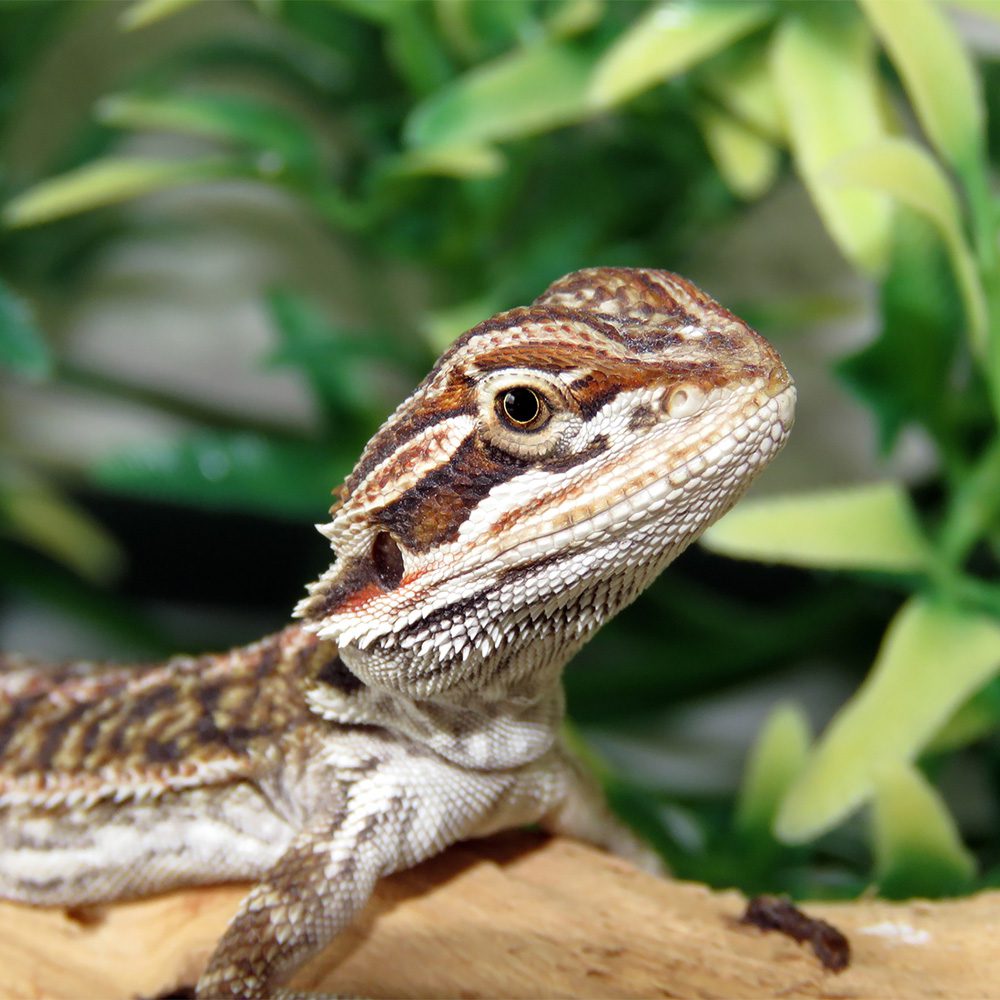

Peregrine
Bearded Dragon
Bearded Dragon
Regular price
£119.99
Regular price
Sale price
£119.99
Unit price
per
Tax included.
Shipping calculated at checkout.
Out of stock
Couldn't load pickup availability

Bearded Dragon Care Guide
Scientific Name: Pogona vitticeps
Common Name: Central Bearded Dragon
Adult Size: 45–60 cm
Lifespan: 8–12+ years
Difficulty: Beginner–Intermediate
Activity: Diurnal
Diet: Omnivore
Size
- Adults usually reach 45–60 cm, including the tail.
- Males are often larger than females.
Housing
- Minimum adult enclosure: 120 × 60 × 60 cm; larger is better.
- Provide a hot basking end and cooler end.
- Include sturdy branches, rocks, hides and basking platforms.
- Secure all heavy décor so it cannot collapse.
- Outdoor time in suitable weather can provide valuable enrichment.
Temperature
- Basking surface: 40–45°C
- Cool end: 22–26°C
- Night: around 18–22°C.
- Use a thermostat and digital thermometers.
Lighting
- Provide a strong 10–12% UVB tube covering much of the enclosure.
- UVB should reach the basking area.
- Provide around 12 hours of light per day.
- Replace UVB according to the manufacturer's recommended lifespan.
Humidity
- Aim for approximately 30–40%.
- Good ventilation is essential.
- Avoid excessive misting or permanently damp substrate.
Food
- Juveniles: predominantly insects with daily greens.
- Adults: mainly greens/vegetables, with insects around 2–3 times per week.
- Suitable insects include crickets, locusts, dubia roaches and calciworms.
- Suitable greens include dandelion, spring greens, rocket and watercress.
- Dust insects with calcium and provide a suitable multivitamin regularly.
- Remove uneaten fresh food daily.
Water
- Provide fresh water in a shallow dish.
- Change daily.
- Good hydration also comes from fresh greens and vegetables.
Shedding
- Young dragons shed frequently as they grow.
- Adults shed less often and may shed in sections.
- Dull or pale skin is normal before shedding.
- Never pull retained shed from the animal.
Handling
- Generally docile and can become accustomed to regular gentle handling.
- Support the entire body and all four feet.
- Avoid grabbing the tail or sudden movements.
- Supervise children during handling.
Health
Watch for:
- Loss of appetite
- Lethargy
- Trembling or weakness
- Swollen jaw or limbs
- Difficulty walking
- Weight loss
- Abnormal faeces
- Retained shed
- Breathing difficulties
Arrange an exotic/reptile-vet examination if persistent health problems occur.
Cleaning
- Remove faeces and uneaten food daily.
- Clean the water bowl daily.
- Spot-clean substrate regularly.
- Deep-clean the enclosure as required.
- Bioactive setups still require regular maintenance.
Before You Bring Your Animal Home
- Fully set up the enclosure beforehand.
- Run heating and UVB and check temperatures.
- Provide basking platforms, hides and enrichment.
- Have appropriate insects, greens, calcium and vitamins ready.
- Ensure the enclosure is secure.
Important Bits
- ☀️ Strong UVB is essential.
- 🔥 Basking surface should reach around 40–45°C.
- 🌡️ Always provide a proper temperature gradient.
- 🥬 Adults should eat mainly greens and vegetables.
- 🦗 Offer appropriately sized livefood.
- 💧 Avoid excessive humidity.
- 🦴 Provide appropriate calcium supplementation.
- 🚫 Never house two males together.
- ❤️ Bearded Dragons are a long-term commitment of 8–12+ years