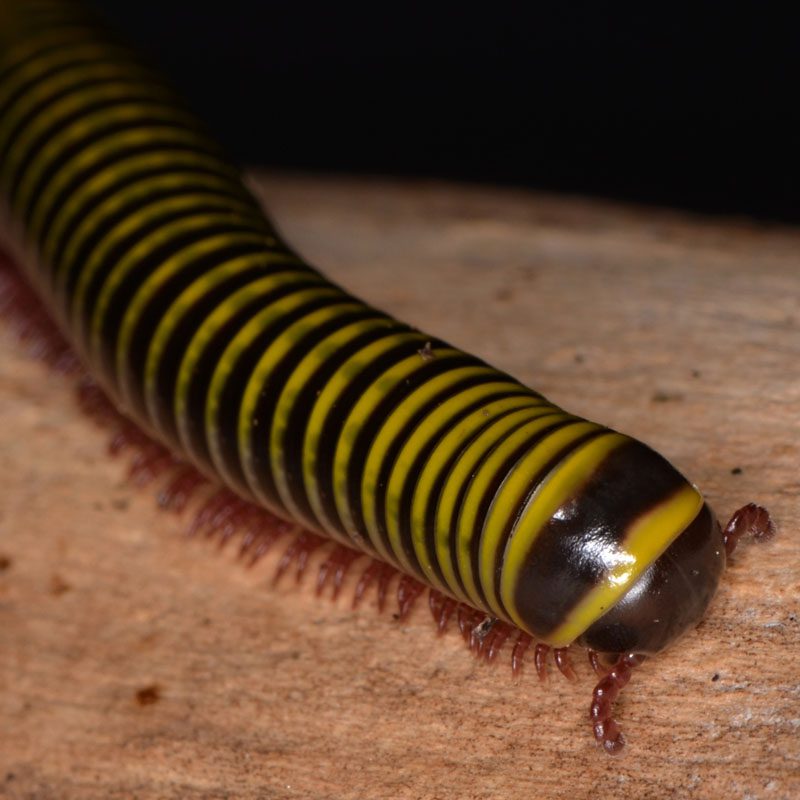
Bumblebee Millipede Care Guide
Scientific Name: Anadenobolus monilicornis
Common Name: Bumblebee Millipede
Adult Size: Around 7–10 cm
Lifespan: Approximately 2–4 years
Difficulty: Beginner
Activity: Mainly nocturnal
Diet: Detritivore
Size
- Adults usually reach around 7–10 cm.
- Provide enough floor space for natural movement and burrowing.
Housing
- Use a secure, well-ventilated terrarium.
- Floor space is more important than height.
- Provide 10–15 cm of soft, organic substrate for burrowing and moulting.
- Add plenty of leaf litter, decaying hardwood and cork bark.
- Keep the enclosure escape-proof.
Temperature
-
22–26°C is ideal.
- A slight drop at night is fine.
- Avoid prolonged temperatures above 28°C.
Lighting
-
UVB is not essential.
- Provide a normal day/night cycle.
- Avoid intense lighting and direct sunlight.
Humidity
- Aim for approximately 70–80%.
- Keep the lower substrate slightly moist while allowing the surface to dry somewhat.
- Good ventilation is essential.
- Avoid waterlogged conditions.
Food
- Bumblebee Millipedes feed mainly on decaying plant material.
- Provide plenty of:
- Decaying hardwood
- Leaf litter
- Rotten wood
- Vegetable matter
- Suitable fresh foods include small amounts of courgette, carrot, squash and leafy greens.
- Provide a constant calcium source, such as cuttlefish bone.
Water
- A very shallow water dish can be provided.
- Use clean, dechlorinated water.
- Most hydration comes from food and the moist substrate.
Shedding
- Millipedes moult underground.
- Never dig up or disturb a buried millipede.
- Deep, moist substrate is essential for safe moulting.
- Spending weeks underground can be completely normal.
Handling
- Handle gently and infrequently.
- Allow the millipede to walk onto your hand rather than picking it up.
- Never squeeze or drop the animal.
- Wash your hands after handling.
Health
Watch for:
- Persistent inactivity
- Damaged body segments or legs
- Difficulty moving
- Mould or pest infestations
- Poor appetite
- Problems during moulting
Cleaning
- Remove uneaten fresh food before it spoils.
- Remove excessive mould where necessary.
-
Do not completely replace the substrate, as decaying material is an important food source.
- Replace leaf litter and rotten wood as they are consumed.
- Spot-clean wherever possible.
Before You Bring Your Animal Home
- Prepare the enclosure in advance.
- Add 10–15 cm+ of suitable organic substrate.
- Add plenty of leaf litter and decaying hardwood.
- Check temperature and humidity.
- Provide hides and natural décor.
- Have calcium and suitable food available.
Important Bits
- 🪵 Decaying wood and leaf litter are essential foods.
- 🕳️ Deep substrate is vital for burrowing and moulting.
- 💧 Keep the substrate moist but never waterlogged.
- 🦴 Provide a constant calcium source.
- 🌙 They are mainly nocturnal.
- ⚠️ Millipedes can release a defensive secretion when stressed.
- 🧼 Wash your hands after handling.
- 🚫 Never disturb a millipede underground, as it may be moulting.