
Peregrine
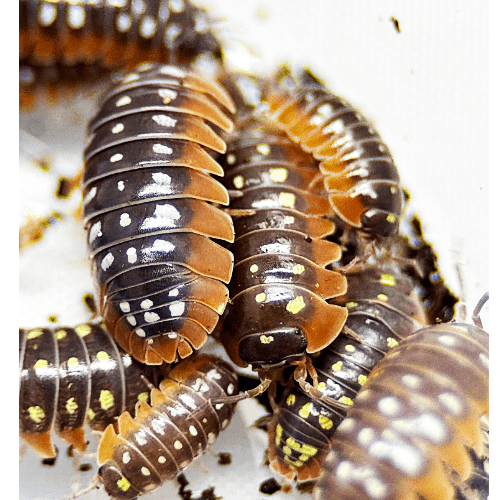
Clown Isopods (Pack of 10)
Clown Isopods (Pack of 10)
Out of stock
Couldn't load pickup availability

CLOWN ISOPOD
Quick Care Guide
Scientific Name: Merulanella sp.
Adult Size: Approx. 2–3 cm | Activity: Mostly nocturnal
📏 SIZE
-
Adults reach around 2–3 cm.
-
Small juveniles are very delicate.
🏠 HOUSING
-
Secure, well-ventilated enclosure.
-
Minimum colony setup: approx. 20 × 20 × 20 cm.
-
Use 8–10 cm+ of suitable soil substrate.
-
Provide cork bark, leaf litter and plenty of hiding places.
-
Keep a damp-to-drier gradient rather than the entire enclosure being wet.
🌡️ TEMPERATURE
-
Aim for 20–25°C.
-
Avoid prolonged temperatures above 27°C.
-
Keep away from radiators and direct sunlight.
💡 LIGHTING
-
No UVB required.
-
Normal room lighting is sufficient.
-
Provide a natural day/night cycle.
💧 HUMIDITY
-
Aim for around 70–80% overall.
-
Keep one area consistently moist.
-
Allow another area to remain slightly drier.
-
Lightly mist as needed rather than keeping everything soaking wet.
🥬 FOOD
-
Main diet: decaying leaves and hardwood.
-
Supplement with small amounts of vegetables such as courgette, carrot and squash.
-
Provide a quality isopod food occasionally.
-
Calcium must always be available for healthy moulting and exoskeleton growth.
💦 WATER
-
They obtain much of their moisture from the substrate and food.
-
No deep water bowl is required.
-
Maintain moisture through misting and a damp substrate area.
🐚 SHEDDING
-
Isopods moult regularly as they grow.
-
They may become less active and hide before moulting.
-
Never disturb a moulting isopod.
🤲 HANDLING
-
Handling is not recommended.
-
They are small, delicate and easily injured.
-
If necessary, gently move them using a soft paintbrush or similar method.
❤️ HEALTH
-
Active, well-fed isopods should have a firm, intact shell.
-
Large numbers hiding constantly may indicate unsuitable conditions.
-
Sudden deaths can be caused by overheating, flooding, poor ventilation or contaminated food/substrate.
-
Provide good ventilation while maintaining the required moisture.
🧹 CLEANING
-
Do not deep-clean an established colony.
-
Remove uneaten fresh food before it moulds.
-
Remove only heavily contaminated areas.
-
Regularly add fresh leaf litter and decaying wood.
-
Preserve established substrate and beneficial microorganisms.
🏡 BEFORE YOU BRING YOUR ANIMAL HOME
✓ Enclosure is secure and well ventilated
✓ Deep, moisture-retaining substrate is prepared
✓ Plenty of leaf litter and decaying hardwood is available
✓ Cork bark/hides are provided
✓ Damp and drier areas are established
✓ Calcium source is available
✓ Temperature is stable before introducing the colony
⚠️ IMPORTANT BITS
-
Keep the enclosure moist, but never waterlogged.
-
Leaf litter and decaying wood are essential parts of their diet and habitat.
-
Good ventilation is vital to prevent stagnant, mouldy conditions.
-
Never use pesticides, treated wood or chemically contaminated materials.
-
Keep away from direct sunlight and excessive heat.
-
A healthy established colony will reproduce naturally when conditions are suitable.