
Snuffle and Swim
Crested Gecko
Crested Gecko
Low stock: 3 left
Couldn't load pickup availability

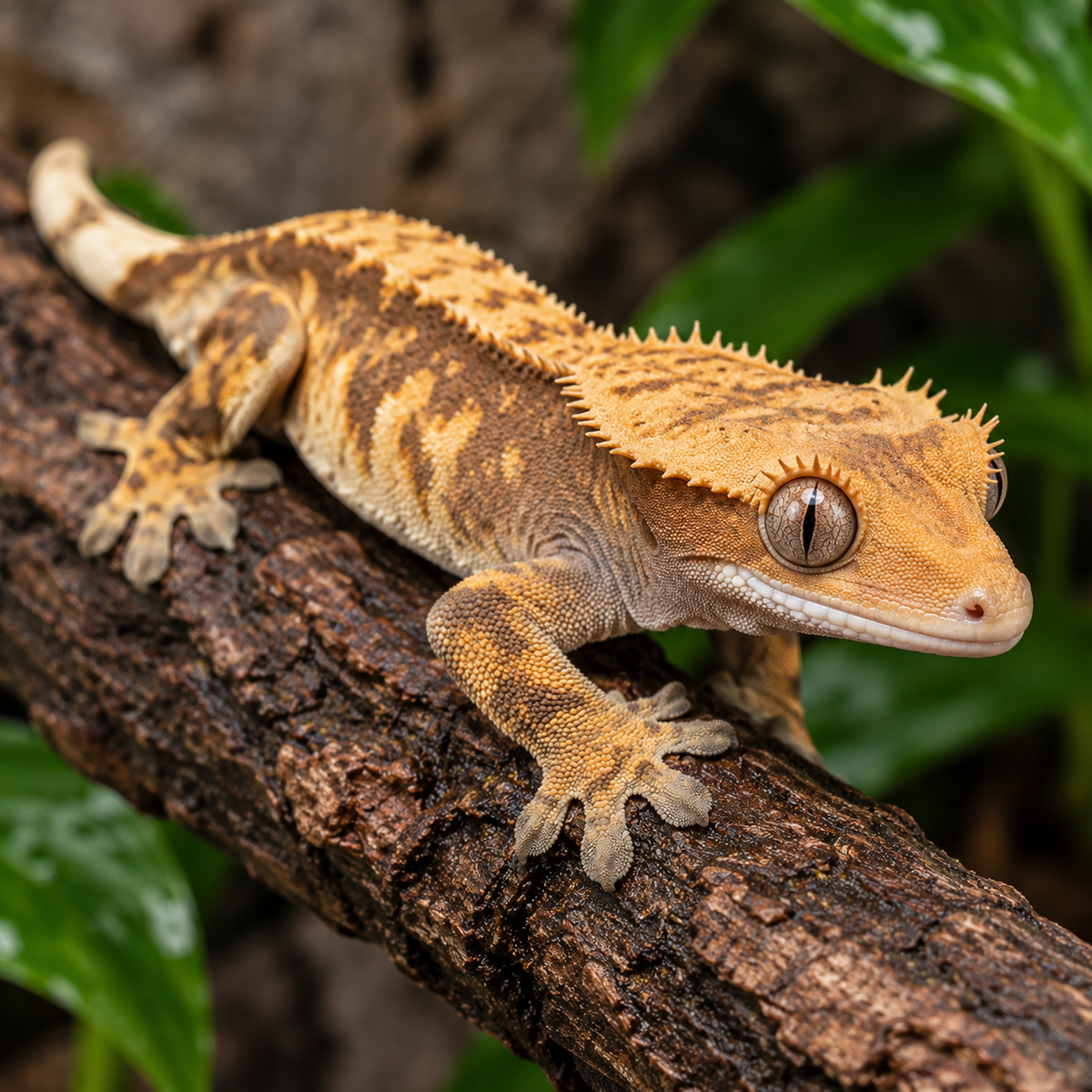
Crested Gecko – Correlophus ciliatus
Crested Geckos are one of the most popular pet geckos, and for good reason. They are attractive, relatively straightforward to care for and have plenty of personality. Originally from New Caledonia, these arboreal geckos spend much of their time climbing amongst branches and foliage.
They are generally calm and can become comfortable with gentle handling, making them a great choice for both newer reptile keepers and experienced enthusiasts. Crested Geckos are also available in a huge variety of colours, patterns and morphs.
Adult Size: Approx. 20–25 cm including tail
Lifespan: Typically 15–20+ years with good care
Difficulty: Beginner–Intermediate
Activity: Mostly crepuscular/nocturnal
Housing: Arboreal tropical setup
Diet: Crested Gecko Diet (CGD) supplemented with suitable live insects
🦎 Crested Gecko Care
Enclosure
Crested Geckos require a tall, well-ventilated enclosure with plenty of climbing opportunities. Branches, cork, vines and foliage should be provided throughout the enclosure, along with secure hiding places. A well-planted or bioactive setup can work particularly well.
As the gecko grows, its enclosure should be upgraded accordingly. An adult should be provided with a suitably sized tall enclosure that allows plenty of vertical movement and enrichment.
🌡️ Temperature
Aim for a daytime temperature gradient of approximately 22–26°C, with a slightly warmer basking area around 26–28°C. Temperatures can safely drop at night, generally to around 18–22°C.
Crested Geckos can become stressed or dangerously overheated if kept too warm, so temperatures should always be monitored using accurate digital thermometers. Any heat source should be controlled by an appropriate thermostat.
☀️ UVB & Lighting
We recommend providing a low-level UVB light during the day. Although Crested Geckos can survive without UVB when receiving an appropriate complete diet, suitable UVB allows natural vitamin D3 production and encourages a more natural day/night cycle.
A regular 12-hour light / 12-hour dark cycle is a good starting point.
💧 Humidity
Humidity should generally sit around 50–70%, with a temporary increase after misting followed by a drying-out period. Constantly wet conditions should be avoided.
Mist the enclosure as required and always provide access to fresh drinking water.
🍌 Feeding
A high-quality complete Crested Gecko Diet (CGD) should form the staple diet. These powdered diets are mixed with water and provide a nutritionally balanced food.
Appropriately sized live insects such as crickets or locusts can also be offered for enrichment and additional protein. Gut-load live food and use appropriate calcium supplementation.
Remove uneaten food regularly and provide fresh CGD according to the manufacturer's instructions.
🌿 Substrate & Furnishings
Suitable substrates include reptile-safe soil-based tropical substrates and bioactive mixes. Young geckos may benefit from simpler setups while feeding and health are being monitored.
Provide plenty of:
Branches and vines
Cork bark
Dense artificial or live foliage
Elevated hiding areas
Feeding ledges
Fresh water
Climbing and resting surfaces
🤲 Handling
Allow a new Crested Gecko time to settle before beginning regular handling. Handling sessions should initially be short and gentle.
Never grab a Crested Gecko by its tail. Crested Geckos can drop their tails when frightened or stressed, and unlike many other gecko species, the tail does not grow back.
🏠 Keeping Together
Crested Geckos are generally best housed individually. Males should never be housed together, and cohabitation can lead to stress, competition, injury or unwanted breeding.
⭐ Is a Crested Gecko right for me?
Crested Geckos are an excellent choice for someone looking for a fascinating tropical reptile without the extreme heating requirements of many other species. Their manageable size, simple feeding routine and beautiful appearance make them particularly popular first reptiles.
Care requirements can vary depending on the animal's age, enclosure and individual needs. Always research the species thoroughly before purchase and ensure the enclosure is fully set up and running correctly before bringing your gecko home.