
Peregrine
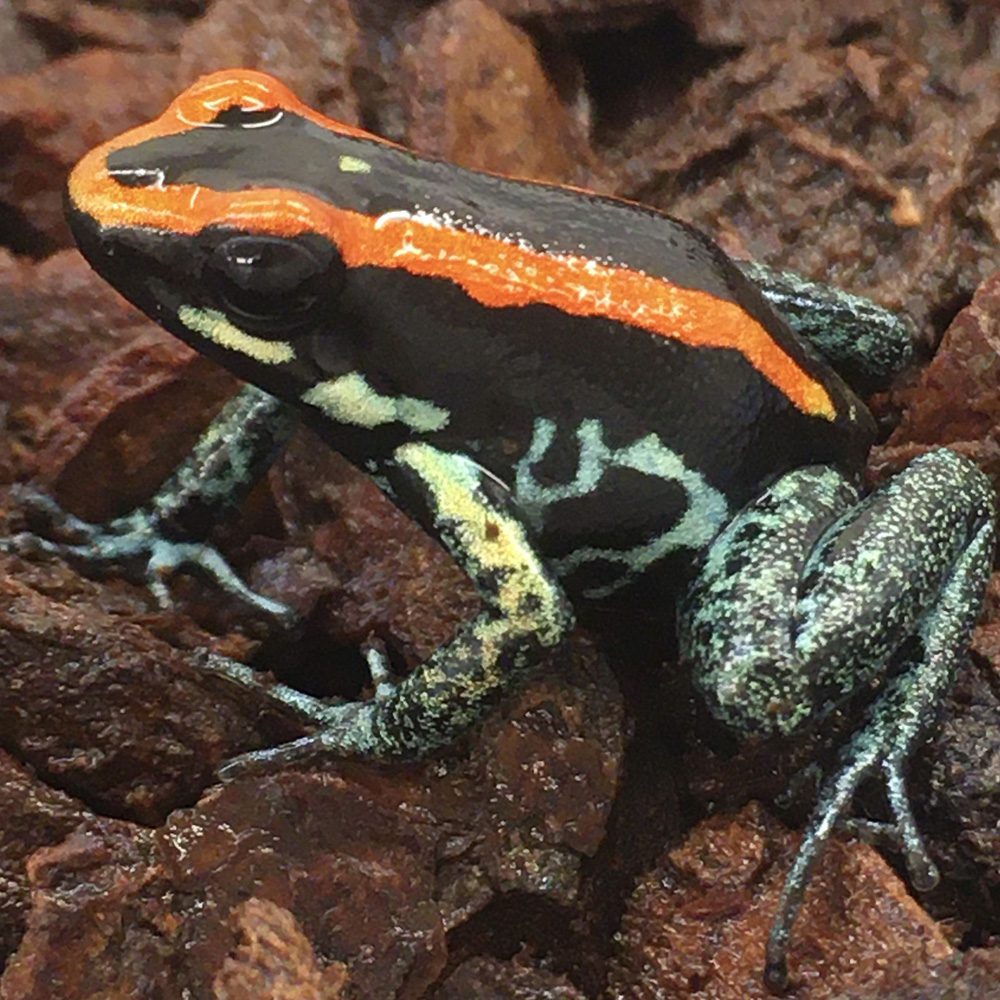
Golfodulcean Poison Arrow Frog
Golfodulcean Poison Arrow Frog
Low stock: 5 left
Couldn't load pickup availability

GOLFODULCEAN POISON ARROW FROG
Quick Care Guide
Scientific Name: Phyllobates vittatus
Adult Size: 2.5–3.5 cm
Lifespan: Around 8–12+ years
Activity: Diurnal • Terrestrial
📏 Size
-
Small adult dart frog, generally around 2.5–3.5 cm.
-
Despite their size, they benefit from a spacious, heavily planted enclosure.
🏠 Housing
-
A pair can be kept in approximately 45 × 45 × 45 cm or larger; more space is preferable for groups.
-
Best kept in a mature bioactive tropical vivarium.
-
Use a drainage layer, tropical substrate and generous leaf litter.
-
Include cork bark, branches, plants and plenty of ground-level cover.
-
Dense planting provides security and helps create different humidity zones.
-
The enclosure must be completely escape-proof.
🌡️ Temperature
-
Daytime: 20–24°C.
-
Night: 18–22°C.
-
Avoid temperatures above 26°C wherever possible.
-
Overheating is a serious risk with this species.
💡 Lighting
-
Provide approximately 12 hours of light per day.
-
Good-quality plant lighting is useful for maintaining live plants.
-
Low-level UVB can be provided, with shaded areas available.
-
Turn lighting off at night.
💧 Humidity
-
Aim for approximately 70–100%, with natural fluctuations throughout the day.
-
Regular misting should keep the enclosure humid without leaving it permanently waterlogged.
-
Good ventilation is essential to prevent stagnant air and mould.
-
Use dechlorinated, treated or suitable purified water for misting.
🍽️ Food
-
Feed tiny live prey frequently.
-
Flightless fruit flies should form the main diet.
-
Springtails and other suitably sized micro-prey can also be offered.
-
Feed daily or most days, depending on the age and condition of the frogs.
-
Lightly dust prey with a suitable calcium/vitamin supplement according to the manufacturer's instructions.
💧 Water
-
Maintain plentiful moisture throughout the vivarium.
-
A very shallow water area can be provided, but deep water is unnecessary.
-
Keep any water areas clean.
-
Dart frogs readily drink water droplets from leaves and enclosure surfaces.
🐸 Shedding
-
Frogs shed their skin regularly and normally consume it.
-
Good hydration and correct humidity help support normal shedding.
-
There is generally no need to interfere with the process.
🤲 Handling
-
Do not handle routinely.
-
Their skin is delicate and easily damaged.
-
Handling also causes unnecessary stress and can expose the frog to contaminants.
-
If movement is absolutely necessary, use a clean catch container rather than handling directly.
❤️ Health
-
Healthy frogs should be alert, active and regularly feeding.
-
Watch for weight loss, lethargy, abnormal posture, skin lesions or reduced appetite.
-
Heat stress and dehydration can become serious very quickly.
-
Maintain excellent hygiene and provide appropriately supplemented food.
-
New animals should ideally be quarantined before joining an established group.
🧹 Cleaning
-
Remove dead insects and obvious waste promptly.
-
Replace contaminated leaf litter as required.
-
Clean water areas regularly.
-
In a mature bioactive setup, springtails and other clean-up organisms help break down waste.
-
Avoid completely stripping an established vivarium unless genuinely necessary.
✅ Before You Bring Your Animal Home
☐ Mature tropical vivarium established
☐ Drainage layer and suitable substrate installed
☐ Plenty of leaf litter and dense planting
☐ Temperature checked and kept below overheating levels
☐ Reliable misting/water system ready
☐ Fruit fly cultures established
☐ Calcium/vitamin supplementation available
☐ Escape-proof enclosure secured
⚠️ Important Bits
-
Very sensitive to overheating — keep temperatures conservative.
-
Captive-bred poison dart frogs are generally not toxic like wild specimens, because their natural alkaloid-containing diet is absent in captivity.
-
Never use pesticides, insecticides or chemical cleaners around the enclosure.
-
Always wash and rinse hands thoroughly before carrying out maintenance.
-
Do not use wild-caught insects as food.
-
Provide plenty of visual cover so the frogs can retreat when they feel exposed.
-
This is a display animal rather than a handling pet.