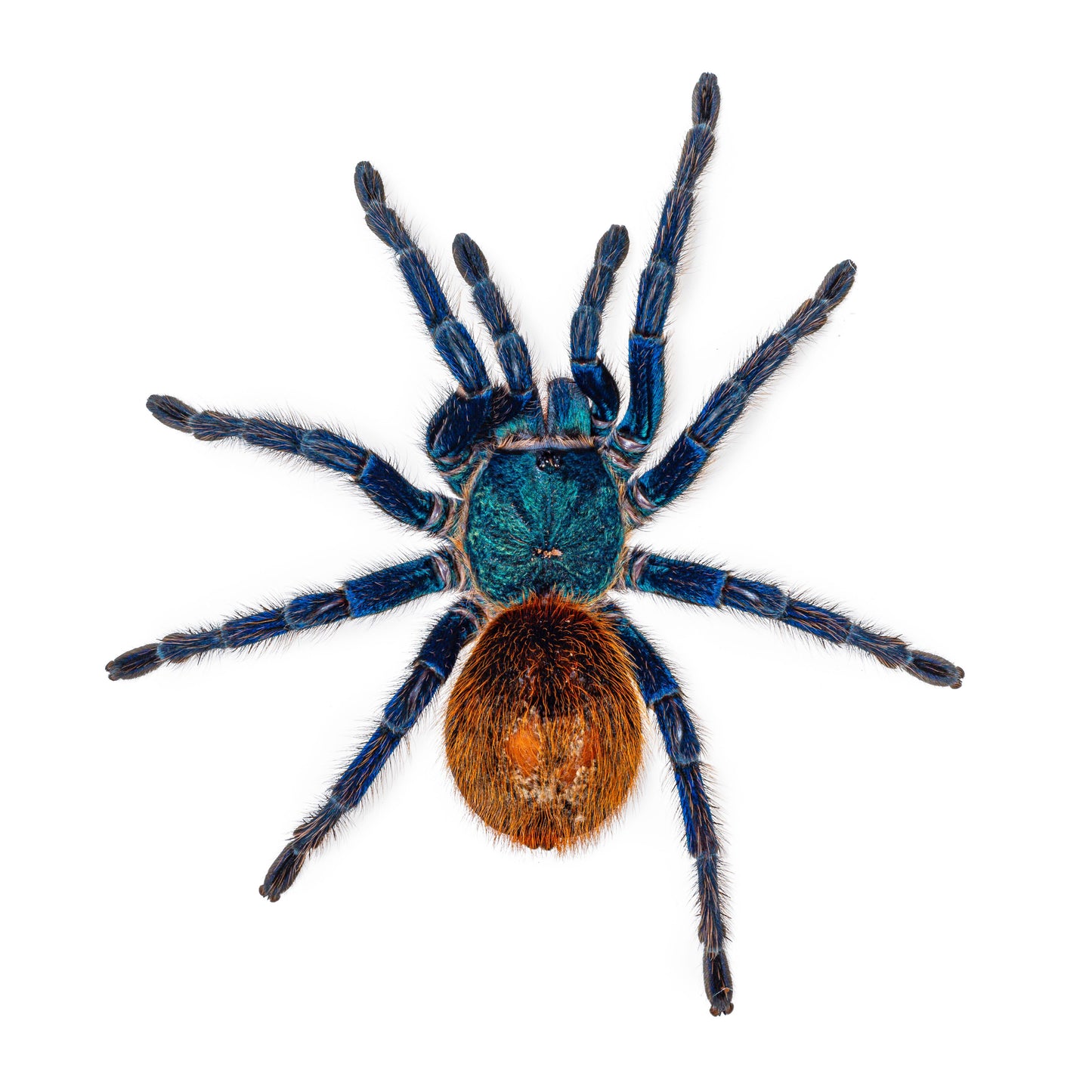
Greenbottle Blue Tarantula Care Guide
Chromatopelma cyaneopubescens
SIZE
• Adult: approx. 12–15 cm leg span
• Lifespan: Females 10–15+ years; males shorter
HOUSING
• Terrestrial/semi-arboreal and very active
• Adult minimum: 45 × 30 × 30 cm
• Provide 10–15 cm of mostly dry substrate
• Add cork bark, hides and plenty of anchor points for webbing
• Secure lid with excellent ventilation
TEMPERATURE
• Day: 23–27°C
• Night: 20–23°C
• Avoid temperatures above 30°C
LIGHTING
• No UVB required
• Normal day/night room lighting is sufficient
• Avoid bright lights directly over the enclosure
HUMIDITY
• Keep relatively dry: around 40–60%
• Do not mist the entire enclosure
• Provide a water dish at all times
FOOD
• Feed appropriately sized crickets, locusts and roaches
• Juveniles need smaller prey more frequently
• Adults generally eat 1–2 times per week, depending on size and appetite
• Remove uneaten prey
WATER
• Provide a shallow water dish at all times
• Refresh regularly with clean water
SHEDDING
• Appetite may decrease before a moult
• Remove live prey when premoult is suspected
• Never disturb or handle during moulting
• Wait until the tarantula has hardened before feeding
HANDLING
• Not recommended
• Can be fast and defensive and may flick urticating hairs
• If movement is necessary, use a catch cup
• Avoid sudden movements around the enclosure
HEALTH
• Watch for lethargy, injury, mites or abnormal posture
• Good ventilation and dry conditions are particularly important
• Avoid excessive humidity and standing water
CLEANING
• Remove uneaten prey and waste regularly
• Keep the water dish clean
• Spot-clean when necessary
• Preserve established webbing where possible
BEFORE YOU BRING YOUR ANIMAL HOME
✓ Secure enclosure
✓ Dry, suitable substrate
✓ Cork bark/hide
✓ Webbing anchor points
✓ Water dish
✓ Thermometer/hygrometer
✓ Suitable live insects
✓ Catch cup & long tongs
IMPORTANT BITS
• Very active webber — allow plenty of space for web construction
• Keep the enclosure well ventilated and predominantly dry
• Urticating hairs can cause significant irritation
• Avoid unnecessary handling
• Never disturb a moulting tarantula
• Ensure the enclosure is escape-proof — they can move surprisingly quickly