
Peregrine
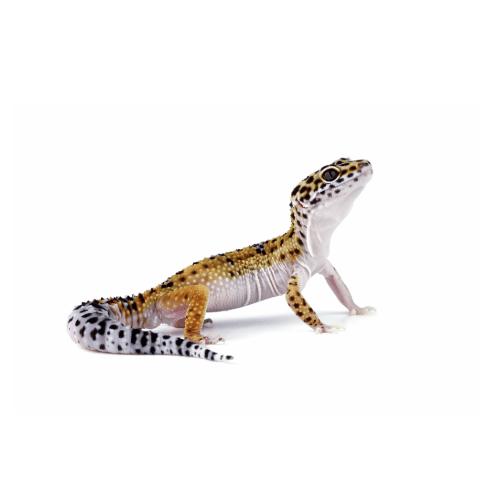
Leopard Gecko
Leopard Gecko
Out of stock
Couldn't load pickup availability

🦎 LEOPARD GECKO — QUICK CARE SHEET
Eublepharis macularius
SIZE: 20–25 cm | LIFESPAN: 15–20+ years | DIET: Insects | HOUSING: Solitary
🏠 HOUSING
Minimum adult vivarium: 90 × 45 × 45 cm
Provide a secure, well-ventilated enclosure with:
Warm hide • Cool hide • Moist hide • Suitable substrate • Water bowl • Décor/enrichment
Leopard Geckos are best housed individually.
🌡️ TEMPERATURE
Basking: 30–32°C
Warm side: 28–30°C
Cool side: 22–25°C
Night: Approx. 18–22°C
Use a thermostat and digital thermometers. Always provide a temperature gradient so your gecko can move away from the heat.
☀️ UVB & LIGHTING
Provide a low-level UVB source with shaded areas available. Aim for approximately 10–12 hours of light per day and replace the UVB lamp according to the manufacturer's instructions.
💧 HUMIDITY
Main enclosure: around 30–40%
A moist hide must always be available, particularly during shedding. Keep it damp, not soaking wet.
🦗 FOOD
Leopard Geckos are insectivores.
Suitable insects: Crickets • Locusts • Dubia roaches • Mealworms • Morio worms • Black Soldier Fly larvae
Insects should generally be no larger than the space between the gecko's eyes.
Juveniles: Daily/every other day
Adults: Around 2–3 feeds per week
Gut-load feeder insects and use appropriate calcium and reptile multivitamin supplements.
💧 WATER
Provide fresh water at all times in a shallow, stable bowl. Change and clean regularly.
🦎 SHEDDING
Pale/grey skin is normal before shedding. The moist hide helps with the process.
Never pull off retained skin. Check toes and tail tip carefully. Seek veterinary advice if shedding problems persist.
🧤 HANDLING
Handle gently and support the whole body. Keep handling close to the floor and allow the gecko to move between your hands.
NEVER grab or pick up a Leopard Gecko by the tail. They can drop their tail when severely threatened.
🩺 HEALTH
Healthy signs: Clear eyes • Good body condition • Normal movement • Good appetite • Normal faeces/urates • Alert behaviour
Contact a reptile-experienced vet if you notice:
Weight loss • Persistent refusal to eat • Severe lethargy • Breathing problems • Swelling/discharge • Mouth problems • Repeated regurgitation • Persistent diarrhoea • Tremors/weakness • Injury • Repeated shedding problems
🧼 CLEANING
Remove waste promptly, clean water bowls regularly and spot-clean as required. Carry out deeper cleaning when necessary using reptile-safe products according to the manufacturer's instructions.
🛒 BEFORE BRINGING YOUR GECKO HOME
☐ 90 × 45 × 45 cm+ vivarium
☐ Thermostat & heat source
☐ Digital thermometers & hygrometer
☐ Low-level UVB
☐ Warm, cool & moist hides
☐ Suitable substrate
☐ Water bowl
☐ Feeder insects & gut-load
☐ Calcium & multivitamin
☐ Décor/enrichment
❤️ IMPORTANT
Leopard Geckos are a long-term commitment and can live for 20 years or more.
Heating, lighting, feeding and daily care must be provided throughout their life.
Never release a pet reptile into the wild.
For further advice, please speak to a member of the Snuffle and Swim team or consult a reptile-experienced veterinary surgeon.