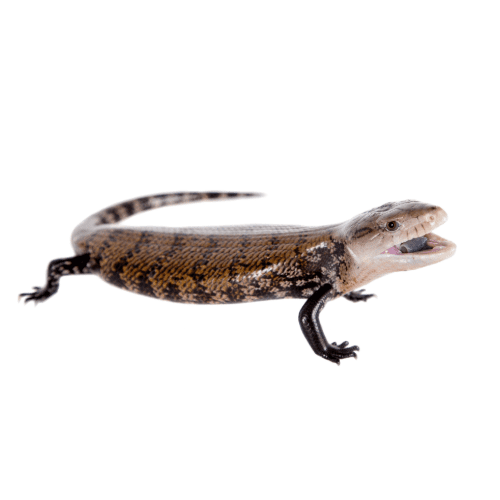
Northern Blue-Tongued Skink
Scientific name: Tiliqua scincoides intermedia
Common names: Northern Blue-Tongued Skink, Northern Blue-Tongue
Adult size: Around 45–60 cm
Lifespan: 15–20+ years
📏 Size
- Large, heavy-bodied terrestrial skink.
- Adults commonly reach 45–60 cm, including the tail.
- Males are often larger and more robust.
🏡 Housing
- Large, secure terrestrial vivarium.
- Adult minimum around 120 × 60 × 60 cm; larger is strongly recommended.
- Provide 10–15 cm+ of diggable substrate.
- Include sturdy hides, cork, branches and ground cover.
- Leave plenty of open floor space for movement.
🌡️ Temperature
- Basking surface: 38–42°C
- Warm end: 28–32°C
- Cool end: 22–26°C
- Night: 18–22°C
- All heating should be thermostatically controlled.
💡 Lighting
- Strong UVB around 10–12% is recommended.
- Provide bright full-spectrum lighting for 10–12 hours daily.
- Ensure the skink can retreat into shade.
💧 Humidity
- Around 40–60% is generally suitable.
- Northern Blue-Tongues tolerate a relatively dry setup but should not be allowed to become dehydrated.
- Good ventilation is important.
🥗 Food
-
Omnivorous with a varied diet.
- Offer suitable vegetables, leafy greens, insects and appropriately formulated reptile food.
- Suitable insects include crickets, locusts and roaches.
- Fruit can be offered occasionally.
- Supplement with calcium and appropriate vitamins.
💧 Water
- Provide a sturdy dish of fresh, clean water at all times.
- The dish should be large enough for the skink to drink from but difficult to tip over.
🐍 Shedding
- Skin becomes dull before shedding.
- Provide suitable humidity and rough surfaces to help remove loose skin.
- Never pull retained shed from toes or tail.
🤲 Handling
- Generally calm and personable when well socialised.
- Support the entire body, particularly the heavy abdomen.
- Allow the skink to approach your hands rather than grabbing it.
- A defensive skink may hiss, open its mouth and display its blue tongue.
❤️ Health
- Monitor appetite, weight, activity and shedding.
- Watch for obesity, respiratory problems, parasites and metabolic bone disease.
- Correct UVB, calcium and temperatures are essential for long-term health.
🧽 Cleaning
- Spot-clean faeces and uneaten food regularly.
- Keep the water bowl clean.
- Replace contaminated substrate and thoroughly clean the enclosure periodically.
🏠 Before You Bring Your Skink Home
- Run the vivarium and check all temperatures before introduction.
- Have deep substrate, hides, UVB, heating and suitable food ready.
- Ensure heating equipment is securely guarded.
⚠️ Important Bits
- Northern Blue-Tongued Skinks are large, active reptiles that need plenty of floor space.
- They are generally terrestrial rather than climbers, so prioritise usable floor area.
- Their blue tongue is a normal defensive display, not a sign of illness.
- Do not house two males together.
- With good care, they can be a 15–20+ year commitment.