
Monkfield
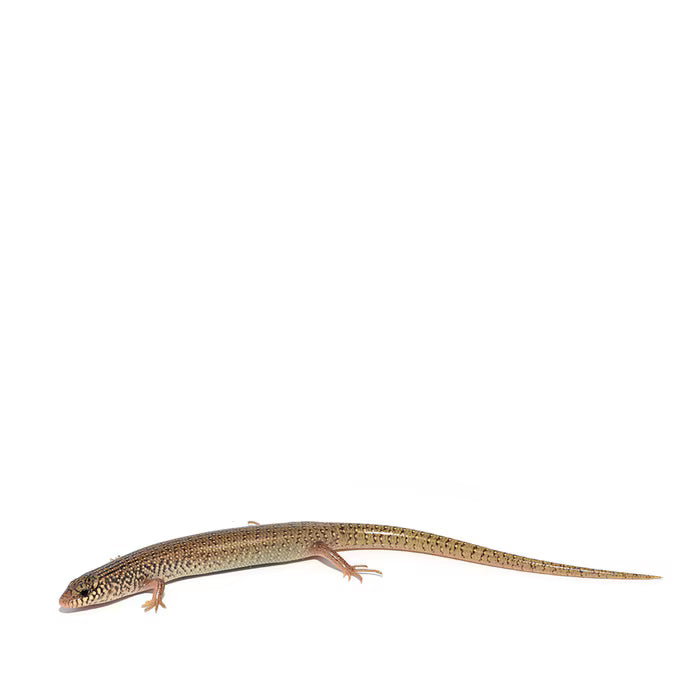
Occellated Skink (Baby)
Occellated Skink (Baby)
Regular price
£39.99
Regular price
Sale price
£39.99
Unit price
per
Tax included.
Shipping calculated at checkout.
Low stock: 1 left
Couldn't load pickup availability

Ocelleated Skink
Scientific name: Chalcides ocellatus
Common names: Ocellated Skink, Ocellated Sand Skink
Adult size: Around 20–30 cm
Lifespan: Around 8–15 years
📏 Size
- Compact, stocky skink with a cylindrical body and short legs.
- Adults usually reach 20–30 cm, including the tail.
🏡 Housing
- Terrestrial species requiring a secure, well-ventilated vivarium.
- Adult minimum around 90 × 45 × 45 cm; larger is preferable.
- Provide 10–15 cm of diggable substrate.
- Add cork, rocks, hides and low branches.
- Leave open areas for movement and basking.
🌡️ Temperature
- Basking surface: 35–40°C
- Warm end: 28–32°C
- Cool end: 22–25°C
- Night: 18–22°C
- All heating should be thermostatically controlled.
💡 Lighting
- Provide low-to-moderate UVB around 5–7%.
- Bright full-spectrum lighting for around 10–12 hours daily.
- Ensure shaded areas are available.
💧 Humidity
- Around 40–60% is generally suitable.
- Keep the enclosure well ventilated.
- Provide a slightly more humid area or humid hide during shedding.
🦗 Food
- Omnivorous, with invertebrates forming the main part of the diet.
- Offer crickets, locusts, roaches, mealworms and other suitable insects.
- Adults can also receive small amounts of suitable fruit and vegetable matter.
- Dust insects with calcium and use appropriate vitamin supplementation.
💧 Water
- Provide a shallow dish of fresh, clean water.
- Replace regularly and whenever contaminated.
🐍 Shedding
- Skin becomes dull before shedding.
- Provide appropriate humidity and rough surfaces to help remove loose skin.
- Never pull retained shed from toes or tail.
🤲 Handling
- Can become accustomed to gentle handling.
- Support the whole body and allow the skink to move naturally.
- Avoid grabbing the tail.
❤️ Health
- Monitor appetite, weight, activity and shedding.
- Watch for respiratory problems, parasites and metabolic bone disease.
- Correct UVB, calcium and temperatures are important for long-term health.
🧽 Cleaning
- Spot-clean waste and uneaten food regularly.
- Keep the water dish clean.
- Replace contaminated substrate and thoroughly clean the enclosure periodically.
🏠 Before You Bring Your Skink Home
- Set up and temperature-test the vivarium beforehand.
- Have deep substrate, hides, UVB, heating and suitable food ready.
- Secure all heating equipment with appropriate guards.
⚠️ Important Bits
- Ocellated Skinks are active burrowers, so deep, diggable substrate is important.
- Provide a clear temperature gradient with a warm basking area and cool retreat.
- Good ventilation is essential.
- Do not house males together.
- Give a new skink time to settle before beginning regular handling.