1
/
of
1
Peregrine
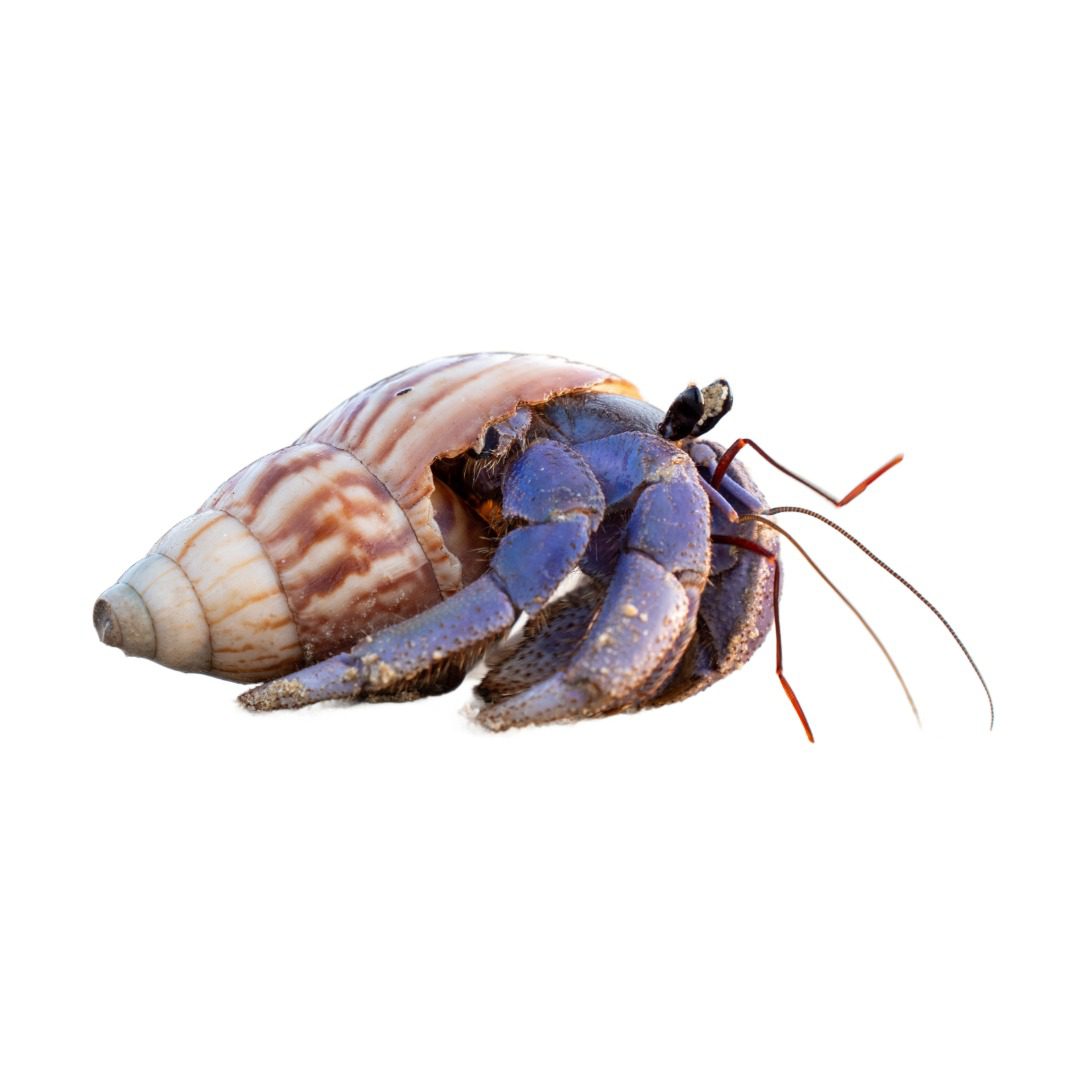
Purple Hermit Crab
Purple Hermit Crab
Regular price
£39.99
Regular price
Sale price
£39.99
Unit price
/
per
Tax included.
Shipping calculated at checkout.
Low stock: 1 left
Couldn't load pickup availability
Purple Hermit Crab
Scientific name: Coenobita violascens
Common names: Purple Hermit Crab, Violet Hermit Crab
Adult size: Around 5–7 cm body length
Lifespan: Potentially 10+ years in suitable care
📏 Size
- Can grow considerably larger than many commonly sold hermit crabs.
- Provide plenty of room for climbing, exploring and moulting.
🏡 Housing
- Use a large, secure, well-ventilated enclosure with deep substrate.
- Provide at least 15–20 cm of substrate so the crab can completely bury itself to moult.
- Include cork bark, branches, hides and climbing areas.
- Keep multiple suitable spare shells available.
🌡️ Temperature
- 24–28°C during the day.
- Avoid temperatures below around 20°C for prolonged periods.
- Use thermostatically controlled heating where required.
💧 Humidity
- Maintain around 75–85% humidity.
- Good ventilation is still essential.
- A humid environment helps prevent dehydration and supports healthy moulting.
🥕 Food
- Omnivorous and should receive a varied diet.
- Offer quality hermit-crab foods alongside vegetables, fruit, leafy greens and suitable protein sources.
- Provide a reliable source of calcium such as cuttlebone.
- Remove uneaten fresh food regularly.
💧 Water
- Provide two water dishes:
- Fresh, dechlorinated water.
- Marine-strength saltwater made with an appropriate marine aquarium salt mix.
- Dishes should allow the crab to enter and exit safely.
🐚 Shedding
- Hermit crabs moult by burying themselves underground.
- A moult can take weeks or even longer.
- Never dig up or disturb a buried crab.
- Ensure deep, moist substrate is available at all times.
🤲 Handling
- Can be handled occasionally but should not be handled unnecessarily.
- They may pinch when frightened.
- Support the crab securely and never pull it from its shell.
❤️ Health
- Dehydration, poor humidity and inadequate calcium can cause serious problems.
- Watch for damaged limbs, unusual inactivity or problems with moulting.
- Provide suitable shells as the crab grows.
🧽 Cleaning
- Remove waste and spoiled food regularly.
- Keep both water dishes clean.
- Replace contaminated substrate while avoiding unnecessary disturbance of established moulting areas.
🏠 Before You Bring Your Crab Home
- Have the enclosure heated and humidity-stable before introduction.
- Prepare deep substrate, climbing structures, hides and spare shells.
- Have both fresh and saltwater available from day one.
⚠️ Important Bits
- Do not use painted or damaged shells.
- Never use ordinary table salt to make saltwater.
- Hermit crabs are social and are generally best kept with compatible individuals when the enclosure is large enough.
- A buried crab must never be disturbed during moulting.
- Despite their name, hermit crabs are not solitary animals and require a stimulating environment.
Share