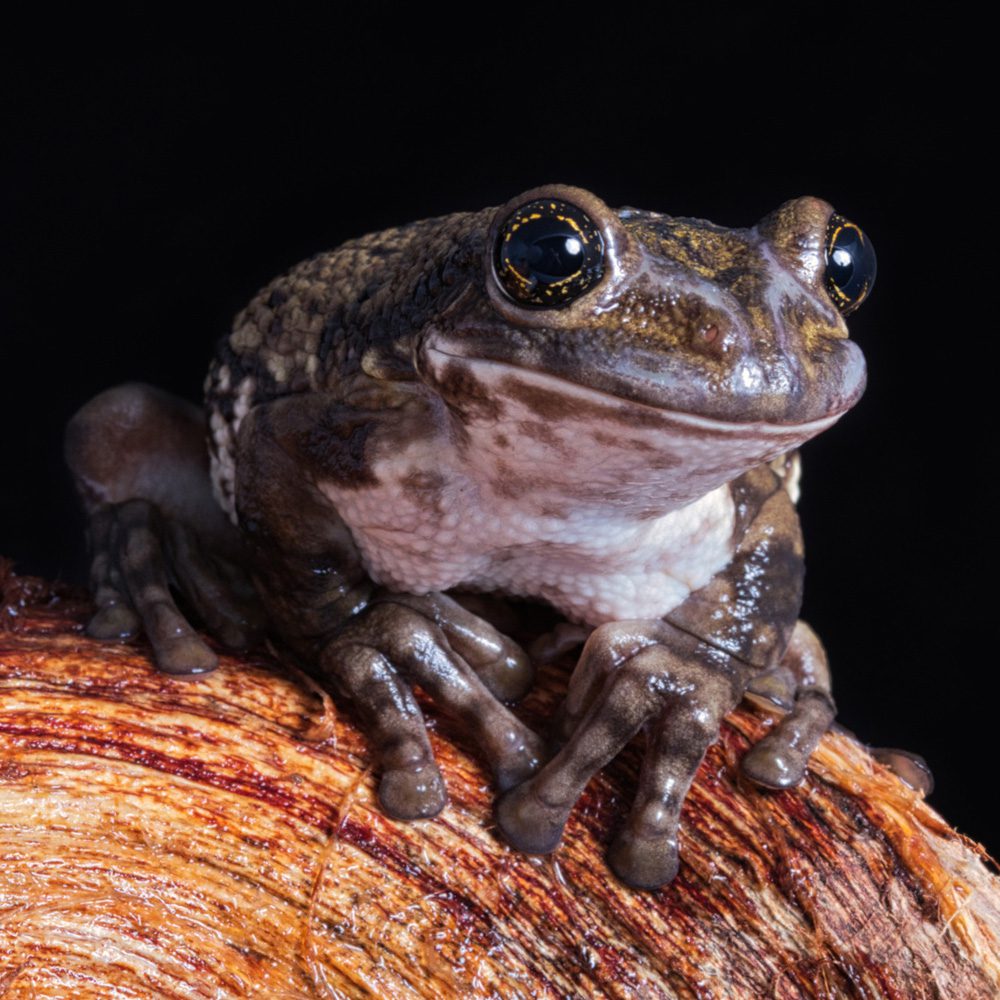
Red-Spotted Milk Frog Care Guide
Trachycephalus resinifictrix — also commonly called the Amazon Milk Frog
SIZE
• Adults: approx. 6–8 cm
• Lifespan: 10–15+ years
HOUSING
• Arboreal species — use a tall, well-ventilated vivarium
• Minimum adult enclosure: 45 × 45 × 60 cm for a small group
• Provide branches, cork, vines and plenty of foliage for climbing
• Keep secure — these frogs are excellent climbers
• A bioactive setup works particularly well
TEMPERATURE
• Day: 24–28°C
• Night: 20–23°C
• Provide a gentle temperature gradient
• Avoid temperatures above 30°C
LIGHTING
• Low-level UVB 2–5% recommended
• 10–12 hours of light per day
• Provide shaded areas so the frog can move away from the light
HUMIDITY
• Aim for 60–80%
• Allow some drying between misting rather than keeping everything constantly wet
• Good ventilation is essential
FOOD
• Feed appropriately sized live insects such as crickets, locusts and roaches
• Dust insects with calcium regularly and use a reptile multivitamin periodically
• Juveniles should be fed more frequently than adults
• Remove uneaten insects
WATER
• Provide a shallow dish of clean, dechlorinated water
• Mist regularly to provide drinking droplets
• Change water daily and whenever soiled
SHEDDING
• Frogs shed their skin regularly and usually eat it
• Correct humidity and hydration help ensure successful shedding
• No assistance is normally required
HANDLING
• Minimise handling — these are display animals
• Their sensitive skin absorbs substances easily
• If necessary, use clean, wet, powder-free gloves
• Never handle with creams, soap or chemicals on your hands
HEALTH
• Watch for weight loss, lethargy, abnormal skin, difficulty climbing or breathing problems
• Poor hygiene and excessive humidity without ventilation can encourage bacterial/fungal problems
• Provide correct calcium/UVB to help prevent metabolic bone disease
• Seek an exotic vet if illness is suspected
CLEANING
• Remove faeces and uneaten food regularly
• Clean the water dish daily
• Wipe heavily soiled surfaces as required
• In bioactive setups, allow the clean-up crew to handle routine waste while still performing regular maintenance
BEFORE YOU BRING YOUR ANIMAL HOME
✓ Tall secure vivarium
✓ Branches, cork, vines & foliage
✓ Suitable substrate
✓ Low-level UVB & appropriate lighting
✓ Heat source + thermostat
✓ Digital thermometers/hygrometer
✓ Water dish
✓ Calcium & multivitamin
✓ Live feeder insects
✓ Suitable spray/misting system
IMPORTANT BITS
• Arboreal and nocturnal — provide plenty of elevated resting places
• Keep away from direct heat sources and hot lights
• Always use dechlorinated water
• Avoid overcrowding
• Wash hands before and after any contact
• Never use untreated tap water for misting or drinking
• Milk frogs can be kept communally when appropriately sized and monitored, but ensure there are plenty of hides and perches for all frogs