
Peregrine
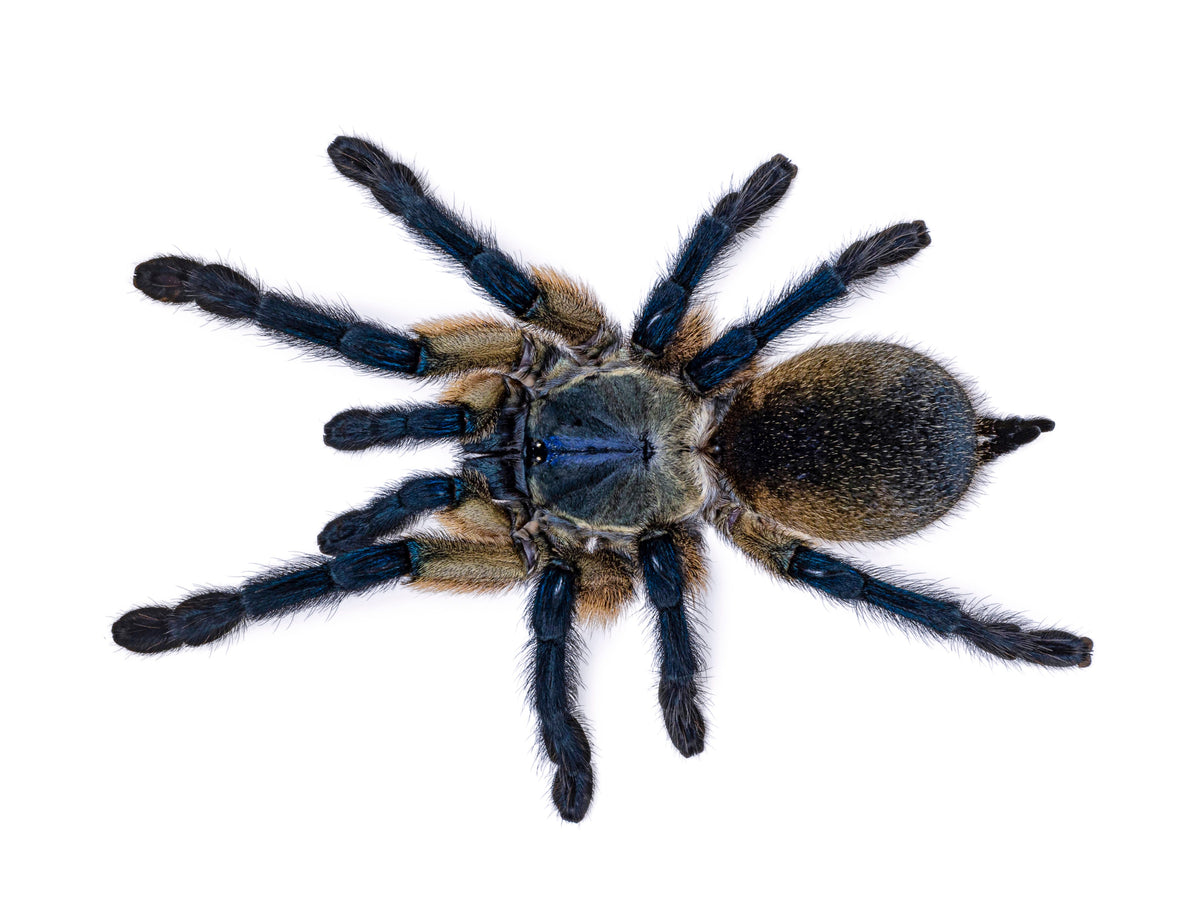
Socotra Island Blue Baboon Tarantula
Socotra Island Blue Baboon Tarantula
Regular price
£52.99
Regular price
Sale price
£52.99
Unit price
per
Tax included.
Shipping calculated at checkout.
Out of stock
Couldn't load pickup availability

SOCOTRA ISLAND BLUE BABOON TARANTULA
Quick Care Guide
Scientific Name: Monocentropus balfouri
Adult Size: 12–15 cm leg span
Lifespan: Females 10–15+ years; males considerably shorter
Activity: Mainly terrestrial, but an excellent webber
📏 Size
- Adult leg span: approximately 12–15 cm.
- Spiderlings require a much smaller, secure enclosure.
🏠 Housing
- Adult enclosure: approximately 30 × 30 × 30 cm.
- Use 8–15 cm of firm, well-packed substrate such as coco fibre/soil mix.
- Provide cork bark, hides and objects it can web around.
- A secure, well-ventilated lid is essential.
- This species is an enthusiastic webber and may heavily web its enclosure.
🌡️ Temperature
- Aim for 22–26°C.
- A small nighttime drop is acceptable.
- Avoid prolonged temperatures above 28°C.
💡 Lighting
- No UVB is required.
- Keep the enclosure away from strong direct sunlight.
- A normal day/night room-light cycle is sufficient.
💧 Humidity
- Aim for approximately 60–70%.
- Keep part of the substrate slightly moist while allowing other areas to remain drier.
- Good ventilation is important to prevent stagnant, overly damp conditions.
🍽️ Food
- Feed appropriately sized live insects, such as crickets, locusts and roaches.
- Adults generally eat around 1–2 suitable prey items every 1–2 weeks, although appetite varies.
- Remove uneaten prey, particularly if the tarantula is preparing to moult.
- Always provide access to fresh water.
💧 Water
- Provide a shallow water dish at all times.
- Refill with fresh, dechlorinated water regularly.
- The water dish should be sturdy enough that it cannot easily be tipped over.
🕸️ Shedding
- Appetite may decrease or stop before a moult.
- The tarantula may become less active and spend more time inside its webbing.
- Never disturb, handle or offer live prey to a tarantula that is moulting.
- Leave the moulted skin in place until the spider has hardened and is active again.
🤲 Handling
- Not recommended.
- This species can be defensive and is extremely fast.
- It may bite if threatened and should be treated as a display animal.
- Use a catch cup and soft tools for necessary transfers or maintenance.
❤️ Health
- Healthy specimens should have a good body condition and respond normally to movement.
- Common problems include dehydration, poor moults, injury and inappropriate temperature/humidity.
- Urticating hairs are not the main defence of this species, but it can bite and should still be handled with caution.
- If the tarantula remains unusually weak, collapsed or unable to use its legs normally, seek specialist veterinary advice.
🧹 Cleaning
- Remove uneaten prey and obvious waste when accessible.
- Avoid destroying established webbing unnecessarily.
- Replace heavily soiled substrate as required rather than routinely stripping the entire enclosure.
- Always provide good ventilation and clean water.
✅ Before You Bring Your Animal Home
☐ Secure, escape-proof enclosure ready
☐ Suitable substrate and hiding places installed
☐ Temperature checked with a reliable thermometer
☐ Shallow water dish provided
☐ Appropriate live food available
☐ Safe, well-ventilated location away from direct sunlight
⚠️ Important Bits
- Fast and defensive species — not suitable for handling.
- Monocentropus balfouri is famous for producing extensive webbing.
- Give the tarantula plenty of anchor points for web construction.
- Keep prey appropriately sized and remove uneaten insects.
- Never disturb a tarantula during a moult.
- Always wash your hands after working in the enclosure.
- Keep the enclosure securely closed at all times.