
Peregrine
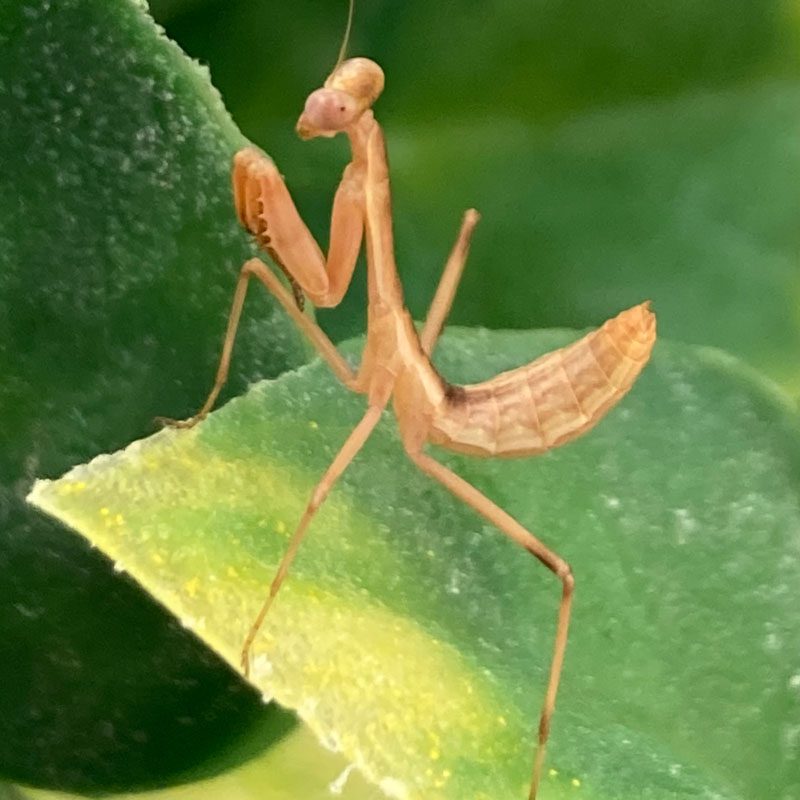
Timor Shield Mantis
Timor Shield Mantis
Regular price
£16.99
Regular price
Sale price
£16.99
Unit price
per
Tax included.
Shipping calculated at checkout.
Low stock: 1 left
Couldn't load pickup availability

TIMOR SHIELD MANTIS
Quick Care Guide
Scientific Name: Rhombodera sp.
Adult Size: Approx. 7–9 cm | Activity: Mainly diurnal
📏 SIZE
- Adults can reach around 7–9 cm.
- Females are generally larger and heavier than males.
- Nymphs are very small and delicate.
🏠 HOUSING
- Tall, well-ventilated enclosure.
- Minimum adult enclosure: approx. 20 × 20 × 30 cm; larger is better.
- Provide plenty of vertical climbing space and twigs/branches.
- The mantis needs clear space to hang upside down when moulting.
- Minimum height should be around 3× the mantis's body length.
🌡️ TEMPERATURE
- Aim for 22–28°C during the day.
- A slight drop at night is beneficial.
- Avoid prolonged temperatures above 30°C.
- Keep away from direct sunlight.
💡 LIGHTING
- No UVB is essential.
- Normal room lighting is suitable.
- Provide a natural day/night cycle.
- Avoid bright lighting directly over the enclosure.
💧 HUMIDITY
- Aim for around 60–75%.
- Lightly mist the enclosure once daily or as required.
- Allow surfaces to dry between mistings.
- Good ventilation is essential to prevent stagnant conditions.
🦗 FOOD
- Feed appropriately sized live insects.
- Suitable prey includes fruit flies, house flies, crickets and small locusts depending on the mantis's size.
- Juveniles generally require food every 1–2 days.
- Adults can usually be fed 2–3 times per week.
- Remove uneaten prey, particularly before moulting.
💦 WATER
- Mantises normally drink water droplets from misting.
- Lightly mist the enclosure rather than providing a deep water dish.
- Avoid soaking the enclosure.
🐚 SHEDDING
- Moulting is the most vulnerable time in a mantis's life.
- The mantis may stop eating and become less active beforehand.
- Ensure sufficient vertical space for the mantis to hang freely.
- Never handle or disturb a mantis during moulting.
- Remove live prey if a moult is approaching.
🤲 HANDLING
- Can become accustomed to gentle handling when calm.
- Allow the mantis to walk onto your hand rather than grabbing it.
- Never handle immediately before or after a moult.
- Avoid sudden movements and excessive handling.
❤️ HEALTH
- Healthy mantises should have good posture, strong grip and a good feeding response.
- Drooping, inability to grip, injuries or prolonged refusal of food can indicate a problem.
- Ensure adequate ventilation and hydration.
- A mantis that is preparing to moult may naturally stop eating.
🧹 CLEANING
- Remove uneaten prey and waste regularly.
- Remove shed skins once they have been abandoned.
- Wipe contaminated surfaces as necessary.
- Avoid harsh chemicals, aerosols and pesticides.
- Do not excessively disturb the enclosure.
🏡 BEFORE YOU BRING YOUR ANIMAL HOME
✓ Tall, secure and well-ventilated enclosure
✓ Plenty of branches and climbing surfaces
✓ Clear vertical moulting space
✓ Temperature checked and stable
✓ Hygrometer installed
✓ Suitable live food available
✓ Fine misting bottle prepared
✓ No loose or dangerous décor
⚠️ IMPORTANT BITS
- Never disturb a mantis while it is moulting.
- Always provide enough height for a complete moult.
- Do not leave crickets or other aggressive prey in the enclosure when the mantis is moulting.
- Timor Shield Mantises should generally be housed individually due to cannibalism.
- Handle gently — their legs, wings and abdomen can be easily damaged.
- Keep away from pesticides, aerosols and household chemicals.