
Peregrine
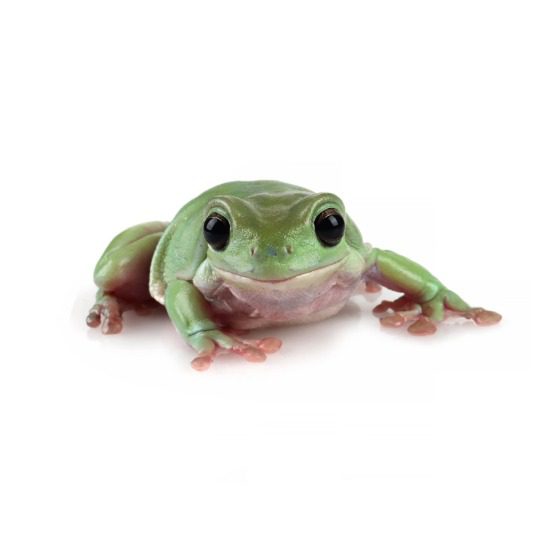
Whites Treefrog
Whites Treefrog
Regular price
£49.99
Regular price
Sale price
£49.99
Unit price
per
Tax included.
Shipping calculated at checkout.
Out of stock
Couldn't load pickup availability

A fun, chunky treefrog with a big appetite. Adults can reach 4 inches long and are also known as “dumpy treefrogs”. Best kept on moss or coco fiber with branches and plants. Whites are a hardy species and make an idea starter frog.
White’s Tree Frog Care Guide
Scientific Name: Litoria caerulea
Also Known As: Dumpy Tree Frog / Australian Green Tree Frog
Adult Size: 7–12 cm
Lifespan: 10–15+ years
Difficulty: Beginner–Intermediate
Activity: Nocturnal
Diet: Insectivore
Size
- Adults usually reach 7–12 cm.
- Females are generally larger than males.
Housing
- Tall, secure vivarium with plenty of vertical space.
- For 1–2 adults, aim for at least 45 × 45 × 60 cm, with larger being preferable.
- Provide sturdy branches, cork, vines and broad-leaved plants at different heights.
- Include a large, shallow water bowl that allows the frog to soak comfortably.
Temperature
- Day: 24–29°C
- Basking area: around 26–30°C; never allow it to become excessively hot.
- Night: around 18–22°C.
- Always use a thermostat with any heat source.
Lighting
- Provide a low-level UVB source, around 5–6%, on a 10–12 hour day/night cycle.
- Provide plenty of shaded areas so the frog can avoid the light when required.
Humidity
- Aim for approximately 50–70%, allowing some variation.
- Mist regularly with dechlorinated water, but don't keep the enclosure permanently saturated.
- Good ventilation is essential.
Food
- Feed appropriately sized live insects such as crickets, locusts and calciworms.
- Adults can generally be fed every 2–3 days.
- Dust feeders with calcium and provide a suitable multivitamin regularly.
Water
- Provide fresh, clean dechlorinated water at all times.
- Change the water daily or whenever contaminated.
- Clean the water bowl regularly.
Shedding
- White’s Tree Frogs shed regularly and will often eat their own shed skin.
- Good hydration and appropriate humidity help ensure healthy shedding.
Handling
- Keep handling to a minimum.
- Their skin is delicate and can absorb substances from our hands.
- If handling is necessary, use clean, powder-free disposable gloves moistened with dechlorinated water.
Health
Watch for:
- Loss of appetite
- Lethargy
- Abnormal skin colour or sores
- Difficulty climbing
- Swollen or sunken eyes
- Weight loss
- Abnormal breathing
Seek an exotic-vet assessment if you notice persistent changes.
Cleaning
- Remove faeces, shed skin and uneaten insects daily.
- Clean and refresh the water bowl daily.
- Spot-clean substrate as required.
- Perform a more thorough enclosure clean regularly while preserving the beneficial organisms in established bioactive setups.
Before You Bring Your Animal Home
- Have the vivarium fully set up and temperature/humidity tested beforehand.
- Install thermostat, lighting and UVB.
- Add sturdy climbing branches and suitable plants.
- Provide a large water bowl.
- Have livefood and supplements ready.
- Use dechlorinated water.
Important Bits
- 🐸 Arboreal: vertical climbing space is essential.
- 🌡️ Always use a thermostat with heating.
- 💧 Avoid keeping the enclosure constantly wet; airflow is important.
- 🪲 Never offer insects larger than the frog can comfortably swallow.
- 🧤 Handle only when necessary and use moistened powder-free gloves.
- 🌙 They are primarily nocturnal, so don't expect lots of daytime activity.
- 🐸 White’s Tree Frogs can be kept together, but frogs should be of similar size and the enclosure must be appropriately spacious